E. coli Extract Preparation for Cell-Free Systems
Each prep stage protects active machinery from the degradative enzymes riding along in the extract.
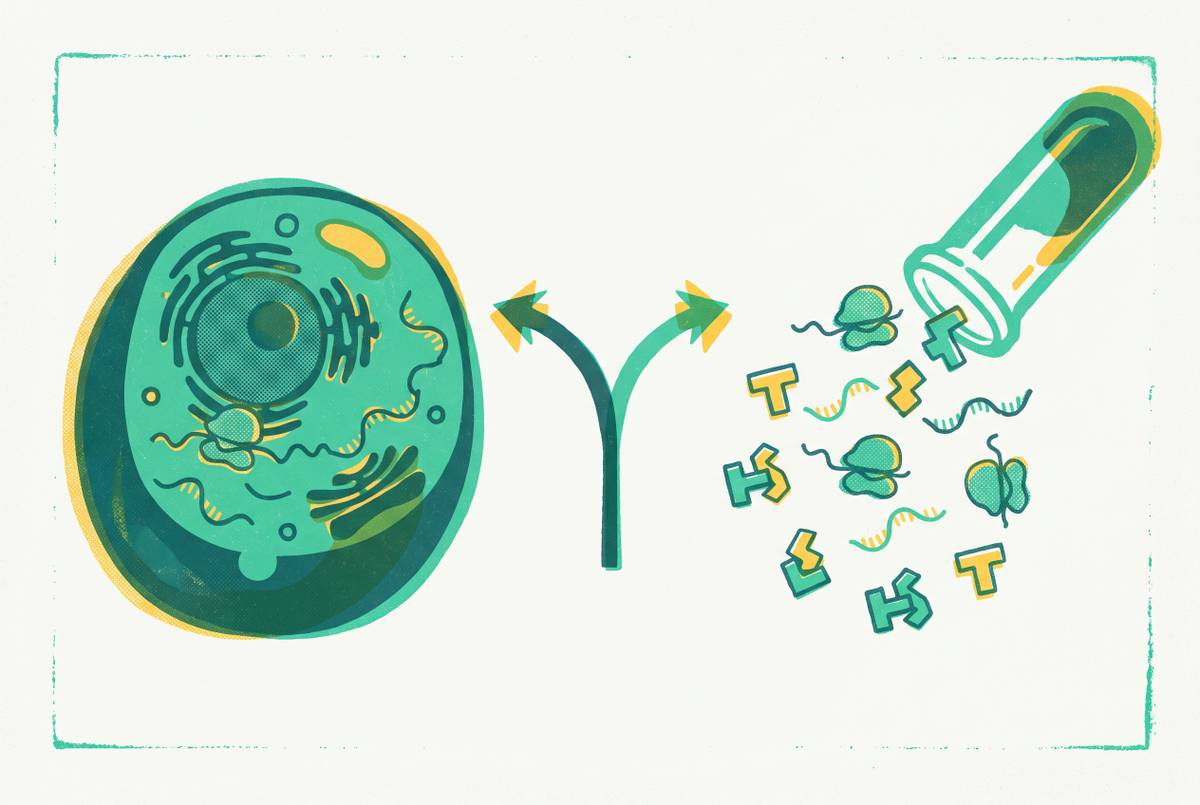
S30 extract is a crude lysate carrying somewhere between 20 and 40% of the total E. coli proteome: ribosomes intact, tRNAs charged, elongation factors and chaperones and hundreds of metabolic enzymes all sitting together in solution. That crowding is exactly why cell-free protein synthesis works at all; the extract behaves like a small working factory, running transcription and translation outside a living cell. That same crowding is also why the extract is fragile. The same mob of proteins that makes the machinery run also includes proteases, nucleases, and phosphatases that will chew through the very substrates the reaction needs, and every step of prep, from strain choice through the final dialysis, either protects the active machinery from that fate or lets it eat itself.
S30 extract preparation moves through six mechanistically linked stages: strain selection, growth and harvest timing, cell washing, lysis, sequential centrifugation, run-off incubation, and dialysis. Each stage either protects the active translation machinery from the proteases, nucleases, and phosphatases that ride along in the same lysate, or it adjusts the biochemical environment to match what ribosomes and elongation factors require. The centrifugation target of roughly 30,000 × g keeps 70S ribosomes in the supernatant while pelleting membrane debris and bulk genomic DNA; run-off incubation at 37°C without added template frees ribosomes stalled on native mRNAs so they become available for the recombinant synthesis reaction; and dialysis removes inorganic phosphate that accumulates from nucleotide hydrolysis and suppresses output if left behind. A well-executed prep, with each stage feeding cleanly into the next, can reach 1 to 1.5 mg/mL of synthesized protein, but a mistake made early rarely announces itself until several steps later, dressed up as a completely different problem.
Reconstituted systems built from individually purified factors exist as an alternative, and they give you tighter control over what's actually in the tube. But they cost more per reaction and produce less protein per dollar spent, so crude lysate stays the workhorse for milligram-scale expression and for high-throughput screening, where a lab needs to run hundreds of conditions without burning through its budget. Extract-based systems run around three cents per microliter, a cost floor that lets people scale in ways reconstituted systems just can't touch. Knowing why each step in the prep protocol matters, mechanically, is what separates someone who can look at a dead batch and say why from someone who just starts over and hopes.
Strain selection as the first consequential decision
There's no single best E. coli strain for extract prep. Yields shift from one strain to the next, and a method tuned for one genetic background won't transfer cleanly to another, since the extract carries whatever biology the source strain happens to bring with it.
Two strains dominate the field, and they serve different jobs. BL21(DE3) derivatives are the default for T7 RNA polymerase-driven systems, since the strain already carries the T7 polymerase gene under lac control; K12 MG1655 variants get used where T7-based expression isn't needed or isn't wanted. Sonication-based, high-throughput prep has been validated across both BL21 Star (DE3) and a K12 MG1655 variant, landing on similar productivity once a handful of parameters get tuned per strain. That's worth sitting with: strain-specific optimization is an engineering problem you can solve, not some wall you run into.
Specialized work calls for engineered strains. RFzero-iy, a BL21(DE3)-based strain, lacks release factor 1 entirely, which lets it drop non-natural amino acids into UAG codons at better than 90% efficiency, since the ribosome no longer competes against a stop signal sitting at that codon. Other strains carry knockouts in nucleases like RNase E to cut down mRNA degradation mid-synthesis, or overexpress chaperones and T7 polymerase under IPTG induction to push extract activity higher. Once you know what you're building, the choice mostly makes itself: standard recombinant protein work points to BL21 Star (DE3), non-canonical amino acid work points to an RF-1 knockout, T7-independent expression points to a K12 background.
Strain choice doesn't stop mattering once the culture's inoculated, either. Different strains carry different cell wall makeups and growth habits, so lysis pressure and centrifugation settings downstream may need adjusting to match.
Growth conditions and the harvest window that determines ribosome concentration
The extract captures whatever the cell had lying around at the moment of lysis, nothing more. Fast-growing cells in early-to-mid exponential phase carry the highest ribosome and translation factor counts, so the standard advice is to harvest during early log phase, before cells start dialing back ribosome production and piling up stress responses.
That window is tighter than a growth curve makes it look. In optimized, large-volume preps using face-centered cubic experimental designs, the best timing for IPTG induction of T7 polymerase and the best harvest point landed around 28% and 58.5% of total growth extent, measured by absorbance. Miss it, and extract quality drops even though the culture still looks like textbook log phase on a plot.
Growth medium plays its own part here. Rich media like 2×YT or terrific broth push faster growth and denser ribosome populations, but they bring more batch-to-batch variability along with them. Cell-free autoinduction media offers a simpler path: it removes the need for a precisely timed IPTG addition, which makes it a sensible starting point for labs without tight fermentation control, or for someone new to extract prep who doesn't want to chase a stopwatch.
There's a less conventional finding worth flagging. Cells harvested under nutrient-stressed, non-growth conditions can still yield active extract, because the ratio of ribosomes to translation factors holds steady even as the absolute numbers drop. That approach trades peak per-reaction yield for a much bigger volume of extract per cultivation run, which matters when the goal is stockpiling rather than squeezing maximum activity out of one batch. Strict mid-log harvest is still the safer default, but when volume per batch is what you're chasing, the stressed-harvest route is a real option worth considering.
Mistimed harvest leaves a specific fingerprint: degraded mRNAs, elevated RNase activity, weak ribosome occupancy in the finished extract. It looks like a lysis problem or a reaction problem downstream, when the actual failure happened hours earlier, back in the shake flask.
Washing cells before lysis: why buffer composition at this stage is not a detail
Washing clears out growth media residue, phosphate, spent metabolites, anything that would otherwise hitch a ride into the lysate and cause trouble later. It can look like simple housekeeping, but the buffer choices made here carry real weight.
S30 buffer, usually Tris-acetate or HEPES-based with added magnesium and potassium salts, is the standard, because its ion concentrations match what ribosomes and elongation factors need to stay folded and working. Magnesium concentration especially carries straight through into the finished extract: too little and ribosomes start dissociating into subunits, too much and the CFPS reaction is already magnesium-saturated before anyone's added a single reagent. Most protocols also throw in DTT or a similar reducing agent, to stop thiol-dependent enzymes from oxidizing during handling.
Most protocols call for several wash-and-spin cycles. Each extra cycle strips out more media carryover, but it also eats up handling time, and every extra minute at room temperature is a minute proteases and nucleases get to work. Cold discipline starts here, not at lysis; cells and buffers need to stay cold through the whole washing run.
The wash step doubles as a quality check whether you treat it that way or not. Pellet appearance, and how readily it resuspends, can flag contamination or cell clumping, the kind of problem that shows back up later as uneven lysis.
Lysis method and the mechanical tradeoffs that shape extract activity
Lysis has one job: break the cell open and get its cytoplasmic contents out while doing as little damage as possible along the way. Too much mechanical shear tears ribosomes apart, too much force shatters genomic DNA into fragments that end up choking the reaction, and too much heat denatures the very enzymes you were trying to save.
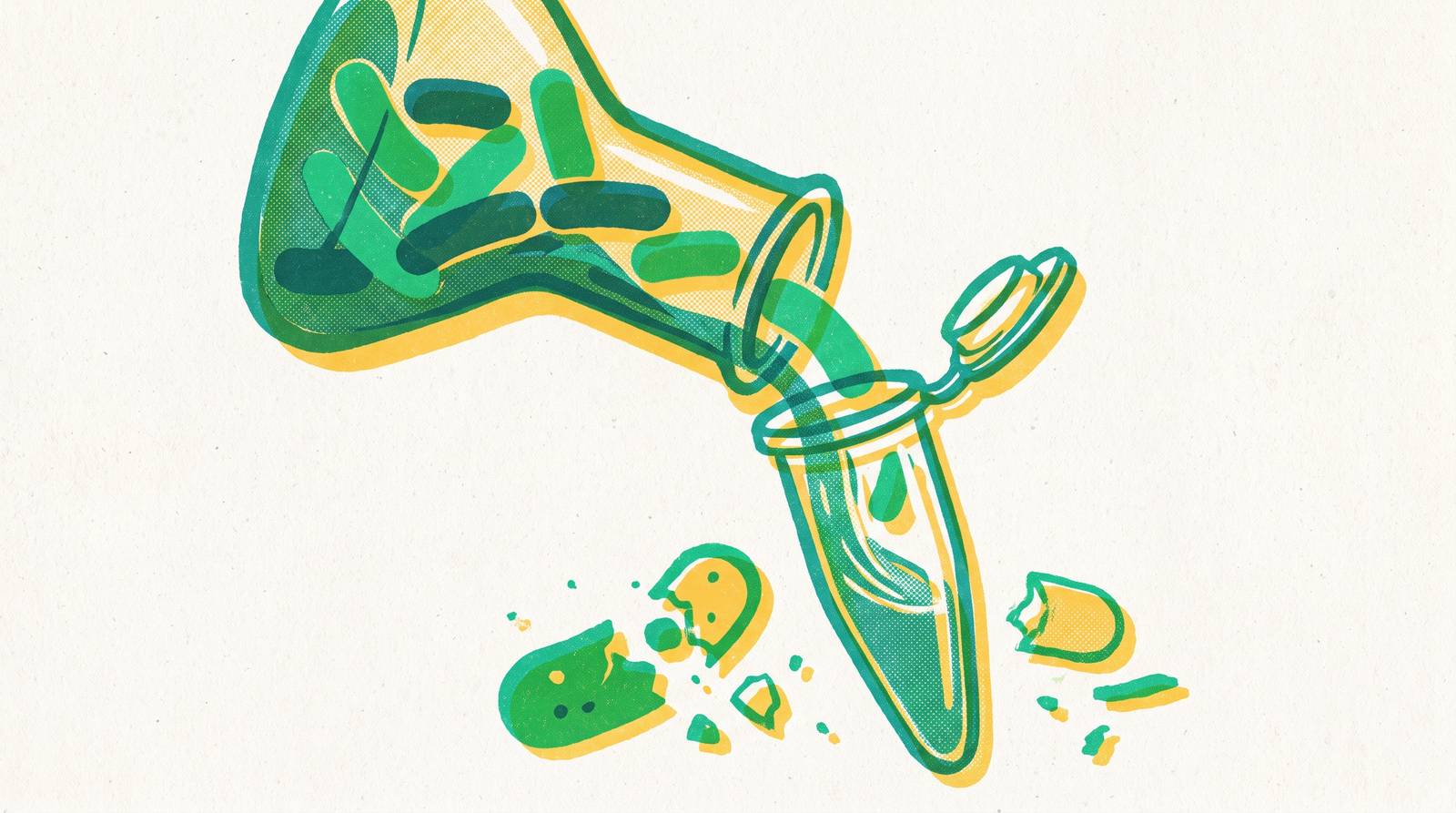
High-pressure homogenization, the French press or a microfluidizer, has been the traditional lab-scale standard. Cells get forced through a small orifice at roughly 20,000 psig, and the sudden pressure drop bursts the membrane. Done right, it's reproducible and scales up to large volumes while staying gentle enough to leave ribosomes intact. The catch is equipment: these machines need calibration and upkeep, and they don't lend themselves to small-volume, high-throughput screening across several strains at once.
Sonication has become the go-to for that kind of screening. It's been validated across culture volumes spanning three orders of magnitude, from 10 mL tubes to 10 L fermentation runs, with productivity holding steady across the whole range, meaning sonication settings can get standardized once and reused at very different scales. Amplitude, pulse duration, cycle count, and the ratio of probe size to sample volume all shape how efficiently lysis happens and how much heat builds up along the way. Heat is the real danger with sonication: it throws off local thermal spikes that denature protein, so pulse-and-rest cycling on ice isn't optional, it's the whole game. The real payoff is throughput. Several strains or conditions can get lysed in parallel, in tubes or plates, which is what actually makes systematic extract optimization possible.
Bead milling and similar mechanical methods show up at industrial scale, or for organisms with unusually tough cell walls, but they're less common for standard E. coli work. On the other end of the spectrum, a minimal-equipment S30-T7 extract protocol can be finished in under an hour with basic lab gear, which lowers the barrier a lot for a new user, though reproducibility still hinges on tight control over energy input and temperature.
Lysis failure shows up in two opposite directions. Incomplete lysis leaves active machinery trapped inside intact cells, never making it into the extract at all; over-lysis shears genomic DNA into fragments that inhibit the reaction and throws off enough heat to damage protein. Both failure modes drag down CFPS yield, and without running proper controls, they're hard to tell apart from problems that started at a completely different stage. A quick check, OD or a look under the scope at the lysate before centrifugation, plus a total protein assay on the supernatant afterward, confirms the cytoplasmic contents actually made it out.
Centrifugation: separating the active fraction from debris without discarding function
Standard protocol calls for two sequential spins, typically around 30,000 × g, to pellet cell wall fragments, membrane debris, and bulk genomic DNA while keeping ribosomes, translation factors, and soluble enzymes in the supernatant where they belong.
Two spins instead of one: the first clears the large debris, the second polishes the supernatant further and strips out residual membrane fragments that would otherwise dump lipid contamination into the reaction. The pellet should end up holding cell envelope fragments, insoluble aggregates, and most of the genomic DNA; the supernatant should hold 70S ribosomes and their subunits, elongation factors, aminoacyl-tRNA synthetases, metabolic enzymes, and chaperones.
Getting the g-force wrong in either direction causes trouble. Too low and debris stays suspended in the extract; too high, pushing into ultracentrifugation range, and the ribosomes themselves start pelleting out right alongside the debris. At 30,000 × g, ribosomes stay in solution. That's the whole point of the number.
Temperature control doesn't get a pass here either. The spin has to run at 4°C start to finish, and activity loss at this stage is usually a refrigeration failure, not a protocol failure. The finished supernatant gives you a visual cue for free: clear, amber to pale yellow, means a clean separation, while cloudiness means an incomplete pellet or membrane carryover that slipped through. What comes out of the second spin is S30 extract in raw form, and depending on the protocol, it either moves straight into run-off incubation or gets processed further from here.
Run-off incubation: freeing ribosomes from native mRNA before the extract is used
At the moment of lysis, a large share of ribosomes are mid-translation, still working through the cell's own native mRNAs. If those ribosomes land in a CFPS reaction still stuck on that old job, they're not available for the recombinant protein the researcher actually wants made.
Run-off incubation fixes this by holding the clarified extract at 37°C with no added DNA or mRNA. Ribosomes finish whatever transcript they're on and fall off; the extract's own RNases then chew through the released native mRNA, freeing those ribosomes up for the next job. The effect on yield is direct and measurable: run-off incubation raises extract productivity, because the extra time at physiological temperature turns a locked-up pool of ribosomes into an available one.
Timing cuts both ways. Most protocols run for a defined incubation period at 37°C. Cut it short and ribosome release stays incomplete; run it too long and the extract starts losing activity as enzymes denature and protease activity climbs. Once run-off finishes, the extract needs to get chilled and processed fast, because the same proteases and RNases that were just doing useful work keep right on going and start tearing into the machinery they just freed up. That window doesn't stay open long.
Some simplified protocols skip run-off entirely to save handling time. The tradeoff shows up on the yield sheet: less translational capacity per unit volume of finished extract.
Dialysis: removing small-molecule inhibitors without stripping the cofactors the extract needs
Dialysis works by letting small molecules equilibrate across a membrane into a defined external buffer. It leaves proteins, ribosomes, and the rest of the macromolecules alone, changing only the small-molecule makeup of the extract.
The main target is inorganic phosphate, which builds up from nucleotide hydrolysis during run-off and from ongoing metabolic activity back at lysis. Elevated phosphate suppresses CFPS output, and dialysis also clears out residual media components and spent metabolites that survived the earlier wash steps.
The dialysis buffer needs the same care as every other buffer in this process, no exceptions. Ionic strength and magnesium concentration have to match what ribosomes require, because dialyzing into a mismatched buffer can strip magnesium out and let ribosomes fall apart into subunits. A reducing agent needs to stick around to protect thiol-dependent enzymes, and pH has to stay controlled, since even a small shift can knock out activity across several enzyme systems at once.
Dialysis is common but not universal. Some protocols instead use an optimized reaction buffer at the CFPS stage that compensates for residual phosphate directly, trading a more complicated reaction setup for a simpler extract prep. After dialysis, the extract gets aliquoted, flash-frozen in liquid nitrogen, and stored at -80°C. Freeze-thaw cycles degrade activity every single time, so aliquot volumes should match what one reaction actually needs, not some convenient round number that's easier to pipette.
How does each step in S30 extract prep affect cell-free protein synthesis yield, and what does failure at each stage look like?
A well-prepared batch of E. coli extract-based CFPS can reach 1 to 1.5 mg/mL of synthesized protein. That ceiling isn't the product of any single step; it's the compounded result of every decision made from strain selection on down.
Pick the wrong strain for the job and no amount of downstream fiddling recovers the loss. RF-1 knockout strains nobody needed, or K12 backgrounds used where T7 expression was actually required, waste the whole batch before growth even starts. Miss the harvest window and the extract carries degraded mRNA and weak ribosome occupancy that no amount of run-off incubation fully fixes. Skip careful buffer work at the wash step and a magnesium imbalance shows up three steps later as mysteriously low yield, with nothing obvious pointing back to the cause. Push lysis too hard, or not hard enough, and either DNA fragments choke the reaction or the trapped machinery never makes it out at all.
Centrifugation mistakes are quieter but cost just as much. Debris left behind drags down yield in a way that looks like a bad reagent lot, while an overzealous spin pellets away ribosomes nobody thought to check for. Run-off incubation, done right, turns an extract from merely alive into actually productive. Dialysis, skipped without compensating at the reaction stage, leaves phosphate quietly capping output well below what the extract could otherwise deliver.
Every one of these stages talks to the others. Get one wrong early, and the mistake doesn't announce itself until three steps later, dressed up as a completely different problem. Sepia Biosciences, a cell-free protein synthesis reagent company, publishes its lot-level QC data openly so researchers can trace exactly where in the prep a variable shifted.