Cell-Free Protein Synthesis for Neoantigen and Research Antigen Production
A faster, simpler way to make hard-to-express research antigens.
Cell-Free Protein Synthesis for Neoantigen and Research Antigen Production.
Why neoantigen and research antigen production keeps failing in cell-based systems
Neoantigen research runs on a simple premise: find the mutation, predict the protein, make it, test whether the immune system reacts to it. The whole cycle depends on getting usable protein fast, and the same holds for any research antigen that needs to be produced, characterized, and revised as data comes in. Cell-based expression was never built for that pace. The standard pipeline runs through gene cloning, transformation, colony selection, culture optimization, and purification, and each of those steps is its own place for things to go wrong. A bad ligation, a slow-growing colony, a culture that just won't reach density: any one of them stalls the whole chain.
Realistic timelines reflect that fragility. Sequence to usable protein in a cell-based system typically takes weeks, and even after all that waiting, there's no guarantee the protein expresses at workable levels, or at all. Antigen work makes this worse in three specific ways. Speed is the first problem: programs sit idle while a single construct fights its way through expression. Scale and throughput compound it, since neoantigens are patient-specific or mutation-specific by definition, so a lab often needs dozens or hundreds of distinct proteins in parallel rather than a large batch of one. Cell-based workflows are built for the opposite: one construct, one host, one scale-up. And then there's protein difficulty. Membrane-associated antigens, toxic domains, unstable folds, multi-domain constructs, these are common in antigen research, and they tend to fail in living hosts because the protein itself damages or overwhelms the cell before yield ever gets high enough to use.
Cell-free protein synthesis was built around exactly that set of requirements, and the rest of this piece works through how.
Cell-free protein synthesis removes the cell from the equation
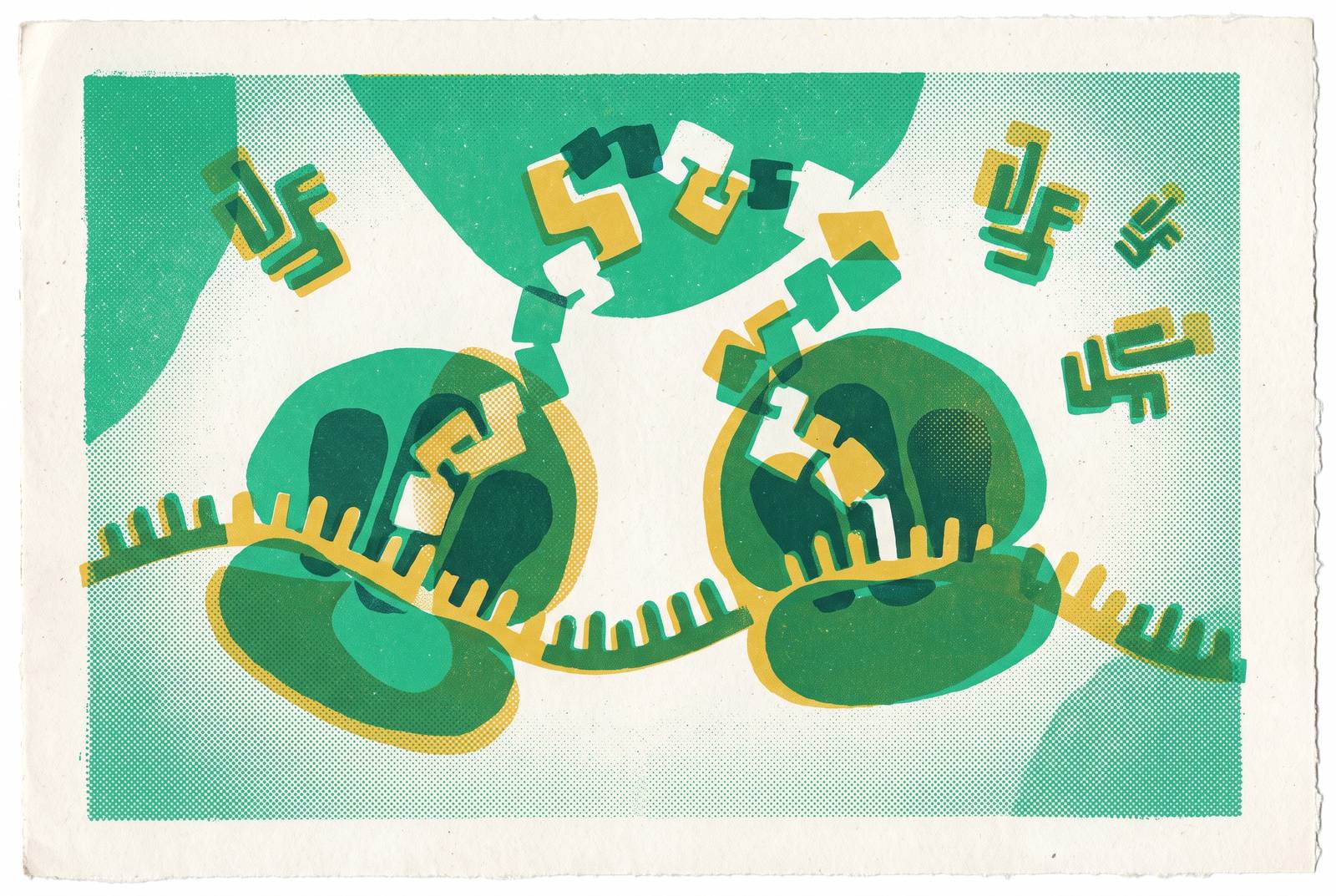
Cell-free protein synthesis, CFPS for short, makes protein using cell extract, an energy source, and a genetic template, with no living cell anywhere in the reaction and no viability constraint to work around. Each module can be swapped or tuned on its own, a point laid out in the Handbook of Synthetic Biology's chapter on cell-free systems.
That modularity comes from a shift most people miss the first time they hear about CFPS. A living cell is optimized to grow and reproduce; protein overexpression is, at best, tolerated, and often actively resisted once yield starts to interfere with the cell's own survival. CFPS throws that priority out. There's no organism to keep alive, so the whole system can be optimized purely for the researcher's goal: get the target protein out, cleanly, at usable yield. That's not a minor efficiency gain. It's what makes toxic proteins and same-day turnaround structurally possible, not just improbable but achievable outcomes rather than lucky exceptions.
The workflow reflects that design. A reaction starts directly from a PCR product or a plasmid: no cloning, no transformation, no colony picking, no waiting to find out if the transformation even took. Because the reaction environment is open rather than sealed inside a membrane, researchers can drop in detergents, redox agents, chaperones, or cofactors right into the tube, something that would require actual genetic engineering to attempt inside a living cell. Many CFPS reagent systems can also be lyophilized, dried down and reconstituted later. A lab can keep reagents shelf-stable and ship them without a cold chain built around live cultures.
None of this is one-size-fits-all, though. The extract itself, whether it's drawn from E. coli, wheat germ, insect cells, or mammalian cells, determines both what post-translational modifications are available and how much protein comes out the other end, making it a real engineering decision. That choice deserves its own treatment.
Choosing the right extract for antigen targets: what each system can and cannot do
E. coli extracts are the workhorse of the field. They're fast to set up, cheap, and better characterized than any other system, with typical yields running up to around 1 mg/mL according to Sigma-Aldrich's technical documentation. The catch is glycosylation: E. coli extracts have none of the enzymatic machinery needed to attach glycans, so any antigen whose epitope depends on authentic glycosylation is off the table unless the reaction is supplemented separately.
Wheat germ extracts sit a step up the complexity ladder. They handle eukaryotic proteins and codon-diverse sequences with better folding fidelity for human-derived targets, and the track record backs that up: the "Human Protein Factory" project at Japan's AIST used an improved wheat germ cell-free system to attempt 13,364 human proteins, and 97.2% of them produced protein. That's a meaningful number for anyone working across large panels of human-derived antigens. The tradeoff is yield, which runs lower than what E. coli delivers.
Plant cell lysate, specifically the ALiCE® system developed by LenioBio, offers a different balance. It's a eukaryotic system built around intact organelles, including active mitochondria that supply continuous energy to the reaction, and it supports both disulfide bond formation and glycosylation. In batch mode, its yields run substantially higher than other eukaryotic cell-free platforms, which matters when a project needs scale and PTM fidelity at the same time.
CHO-derived and insect cell (Sf21) lysates go further still on complexity. Both have been demonstrated on genuinely hard targets: two AB5 toxins, cholera toxin and heat-labile enterotoxin, were synthesized and functionally characterized using CHO and Sf21 cell-free systems, which shows these platforms can produce complex, functionally intact proteins rather than just correctly folded fragments. Yields land below what prokaryotic systems deliver, so these extracts make sense when PTM authenticity outweighs raw throughput.
Disulfide bond formation isn't locked to any one extract. Using glutathione redox buffers alongside the enzyme DsbC, labs have demonstrated large-scale production of disulfide-rich proteins ranging from roughly 14 kDa up past 50 kDa. Put the decision logic simply: an unglycosylated, human-derived antigen probably does fine in wheat germ or E. coli with a redox buffer added; anything where glycosylation defines the epitope needs a eukaryotic extract; and when throughput is the constraint that matters most, prokaryotic systems running near 1 mg/mL are the sensible starting point. The extract choice governs whether the antigen folds correctly, whether PTMs are available, and what yield is achievable, a primary decision and not a detail.
How CFPS handles the antigen targets that defeat cell-based expression
The proteins that give antigen researchers the most trouble share a pattern: membrane association, toxic domains, a tendency to aggregate into inclusion bodies, instability against host proteases, or multi-domain architecture that won't fold right inside a cell. Cell-based systems fail on these targets for a structural reason.
Take toxic proteins first. In a living host, the mechanism of failure is direct: the protein kills or cripples the cell before enough of it accumulates to be useful. CFPS sidesteps that problem completely, because there's no living cell left to damage. Toxicity, in a cell-free reaction, simply stops being a variable that affects the outcome.
Membrane proteins carry their own history of failure in heterologous hosts like E. coli, where getting them to express usually means engineering modified strains, and even then the protein often ends up trapped in inclusion bodies rather than folded and functional. CFPS avoids toxicity altogether and lets researchers add detergents, lipids, or nanodiscs straight into the reaction to give the protein something to fold against. Sigma-Aldrich's documentation shows the range of what's been demonstrated this way is wide: kinases, enzymes, transporters, receptors, GPCRs, multimeric assemblies, and toxic proteins spanning roughly 10 kDa to over 220 kDa.
Inclusion bodies deserve a closer look, since they're one of the more common ways cell-based expression quietly fails. They form when overproduction outpaces what the cell's own chaperone systems can handle, and the protein aggregates instead of folding. CFPS reverses who's in charge of that process: chaperone supplements go directly into the open reaction, so the researcher sets the folding environment rather than hoping the host cell's internal capacity happens to be enough. Multi-domain proteins get a similar benefit. Reaction composition can be tuned, accessory enzymatic functions introduced, and PTM strategies engineered into the mix, a point the Microbiology Society's review by Aw, published August 2026, lays out directly.
None of this makes CFPS a universal fix. PTM coverage still depends on which extract is in use, and without a eukaryotic system, coverage is incomplete. Some glycoforms need hybrid approaches that add both cost and complexity, and disulfide-rich targets require redox buffer optimization careful enough that it can complicate efforts to automate the workflow. Those are real constraints, not asterisks to wave away.
Still, the practical takeaway holds. Proteins that got shelved years ago as unexpressible should be pulled back out and tested in a cell-free reaction, because the specific failure mode that killed them in a living host frequently doesn't exist in CFPS at all.
Speed and throughput: going from sequence to usable antigen protein in hours, not weeks
Neoantigen research has a structural problem that has nothing to do with expression difficulty and everything to do with volume. Neoantigens are specific to a patient or to a particular mutation, so a research program doesn't need a lot of one protein, it needs a little of many proteins, often tens to hundreds of distinct variants at once. Cell-based expression, built around single-construct pipelines, was never architected for that kind of parallel demand.
CFPS changes the math because it starts directly from a PCR product or plasmid, with no transformation step, no colony picking, and no culture growth phase standing between template and result. Synthesis and a functional assay are both achievable within hours of having the template in hand. Reactions also miniaturize well: they run in standard plate formats, so many variants get synthesized in parallel using lab infrastructure that's already sitting on the bench.
A 2025 proof-of-concept out of the University of Edinburgh shows what that speed actually buys a research program. Thornton, Boyle, Laohakunakorn, and Regan, publishing in ACS Synthetic Biology, paired CFPS with machine-learning-guided variant design. The team screened 48 random variants first to sample the fitness landscape, then synthesized and screened 32 targeted variants built from what that first round taught them. The best mutant to come out of the process showed a fourfold fitness improvement over the wild-type protease, and four identified variants were expressed in vivo, purified, and had their activity confirmed within six days of starting. That's not a marginal speedup. It's a demonstration that CFPS can carry the entire screening burden of a variant program and hand off only the finalists for in vivo confirmation.
CFPS produces enough distinct proteins in parallel to actually feed a downstream assay pipeline, changing how a variant program gets designed from the outset rather than just shaving time off the value of raw speed. It's that CFPS produces enough distinct proteins in parallel to actually feed a downstream assay pipeline, changing how a variant program gets designed from the outset rather than just shaving time off an unchanged process. Yield itself isn't fixed under this kind of pressure. A study applying AI-driven active learning to CFPS optimization, tested on colicin M and colicin E1 in E. coli-based systems and on colicin M in a HeLa-based system, achieved a 2- to 9-fold increase in yield across just four optimization cycles. Separately, AI-driven high-throughput droplet screening of cell-free gene expression, published in Nature Communications in 2025, pushes miniaturization further still, screening variants at a scale that plate-based approaches alone can't match.
Put together, these results reframe what the actual bottleneck is in a neoantigen program. It's rarely a question of which protein to make next. It's how fast a lab can make, test, and iterate across the candidates already on the list, and CFPS moves that constraint from a matter of weeks to a matter of hours.
Milligram-scale production and linear scalability once a candidate antigen is confirmed
CFPS gets typecast, often unfairly, as a screening tool that hands off to some other system once a candidate is confirmed. That reputation doesn't hold up.
Well-characterized CFPS systems scale close to linearly: reaction volume goes up without the per-volume yield dropping off, which is a sharp contrast to cell-based fermentation, where every jump in scale usually forces a fresh round of re-optimization. Scale-up work on cell-free cytokine production backs this up directly, showing linear scalability running from microscale reactions all the way to bioreactor volumes, hitting gram-per-liter titres while keeping downstream purification of disulfide-bonded proteins manageable, a step that points toward cGMP-compliant in vitro manufacturing down the line.
That gives antigen researchers two modes on a single platform rather than two separate systems to manage. Rapid screening across large variant libraries covers the front end, and milligram-scale production for assays and characterization covers what comes after a candidate gets confirmed, with no need to switch platforms in between. Purification tends to be simpler too, since there's no cell debris left over from culture and less host-cell protein background to strip out; the same open-reaction design that lets researchers rescue difficult proteins also makes the cleanup after synthesis more direct.
That said, the caveat should be stated clearly rather than glossed over. Purification suitable for very high-purity, therapeutic-grade output is still a work in progress across the field, and the Microbiology Society's review by Aw, published August 2026, names limited scale-up practice and the absence of CFPS-specific quality and regulatory standards as real barriers in manufacturing contexts. For research antigen work, that caveat matters less. Applications like immunoassay development, antibody generation, structural studies, and binding assays generally need milligram quantities, and that's a bar current CFPS platforms clear without difficulty.
Reproducibility and reagent quality: the hidden variable that determines whether CFPS results transfer between experiments
Reproducibility has dogged CFPS for years. A quantitative interlaboratory study published in ACS Synthetic Biology in 2019, still the field's baseline reference on the question, found that reagent preparation was a significant driver of the variability labs saw when running the same protocol. That distinction changes which fixes researchers apply, since treating extract preparation variability and reagent preparation variability as the same thing leads them to troubleshoot the wrong variable. Extract preparation variability and reagent preparation variability are different problems with different fixes, and treating them as the same thing leads researchers to troubleshoot the wrong variable.
None of these are solved by a single clever protocol tweak. They're structural gaps in how the field currently operates.
What actually closes the gap is lot-level quality control data. When a lab has that data in hand, it can trace a performance drop to a specific reagent lot instead of guessing, troubleshoot failures against evidence instead of intuition, and set acceptance criteria for a reagent batch before committing a valuable protein run to it. Formulation transparency plays the same role from a different angle: if a researcher can see what's in a reagent, substitutions get easier to spot, failures get easier to diagnose, and protocols get easier to standardize across different instruments and different hands running the same experiment. Reagents that stay a black box make all three of those things much harder.
That standardization is also what makes automation worth the investment. Plate-based formats and standard incubators only turn CFPS into a genuine high-throughput platform, rather than a string of manual one-off reactions, if the reagents behind them are consistent enough to trust at scale. OpenCFPS™, from Sepia Biosciences, is built around that exact gap: lot-level QC data published openly, formulations documented rather than hidden, and pricing structured so that running CFPS at high throughput doesn't become cost-prohibitive for a research budget. For labs trying to standardize and scale an antigen production workflow, that kind of transparency is the difference between a result that holds up and one that doesn't survive being repeated on a different bench. The Microbiology Society review by Aw names persistent barriers in the field, including reproducibility, vulnerable supply chains, limited scale-up practice, downstream purification suitable for therapeutic products, and the absence of CFPS-specific quality and regulatory expectations.
Building a practical CFPS workflow for antigen production: what the setup looks like
Every CFPS workflow starts in the same place: the sequence. Whether that arrives as a PCR product or a plasmid, the first real decision is codon optimization for whichever extract system the project is going to use.
From there, extract selection follows the logic laid out earlier, but it's worth restating as a decision a researcher actually has to make on day one. A simple or prokaryotic antigen that doesn't need post-translational modification belongs in an E. coli extract, since that's where yield and throughput both peak. A human-derived antigen that needs disulfide bonds but not glycosylation is a good fit for wheat germ, or for E. coli paired with a redox buffer. Anything where glycosylation defines the epitope has to move to a eukaryotic extract, whether that's wheat germ at higher fidelity, plant lysate for batch-mode yield, or a mammalian or insect system when PTM authenticity outweighs everything else.
None of these decisions are permanent. A researcher can start a variant library in E. coli extract for speed, narrow the field using the throughput advantages CFPS offers over cell-based screening, and only move the finalists into a eukaryotic extract once PTM fidelity actually matters for the assay ahead. That flexibility, choosing the tool for the target rather than forcing every target through the same expression system, is the practical payoff of building an antigen pipeline around cell-free synthesis rather than around a single host cell and hoping it cooperates. SOURCE PAGES (what the pages behind the outline's links say).